
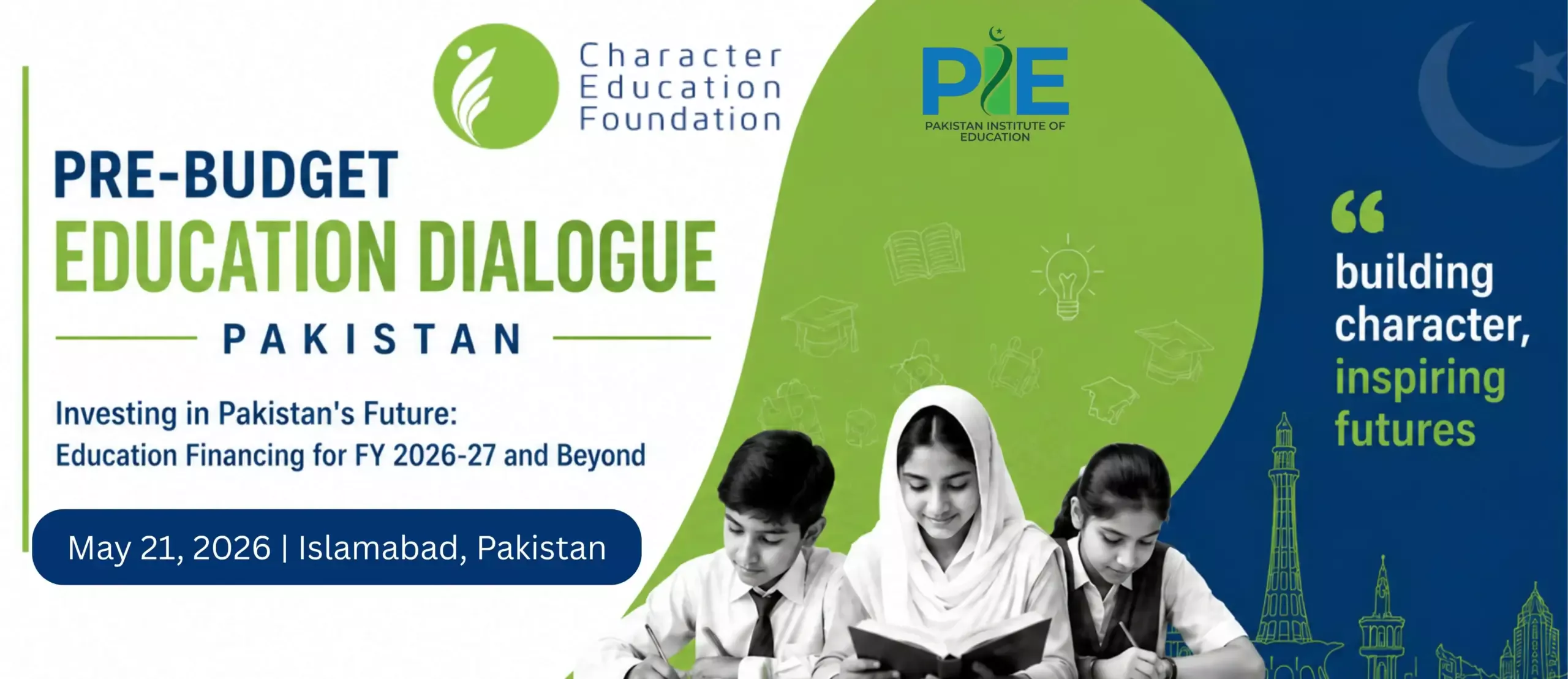
FIX PAKISTAN’s EDUCATION BUDGET BEFORE IT’s TOO LATE
Education spending has hit a historic low of 0.8% of GDP. Twenty-five million children are out of school. The next federal budget is weeks away. This is the last room where it can change.
Every Statistic Below is a Child. A classroom. A future Being Quietly written off.
Pakistan’s own government data — the PIE Public Financing in Education 2025–26 report — confirms what many already knew: the education financing system is not just underfunded. It is structurally broken. And the next budget cycle is where it either gets fixed or gets worse.
0.8%
25M+
77%
-12%
toric Low
168th
5%
Pakistan’s Education Financing Crisis:
A Statistical Breakdown (FY2026-27)
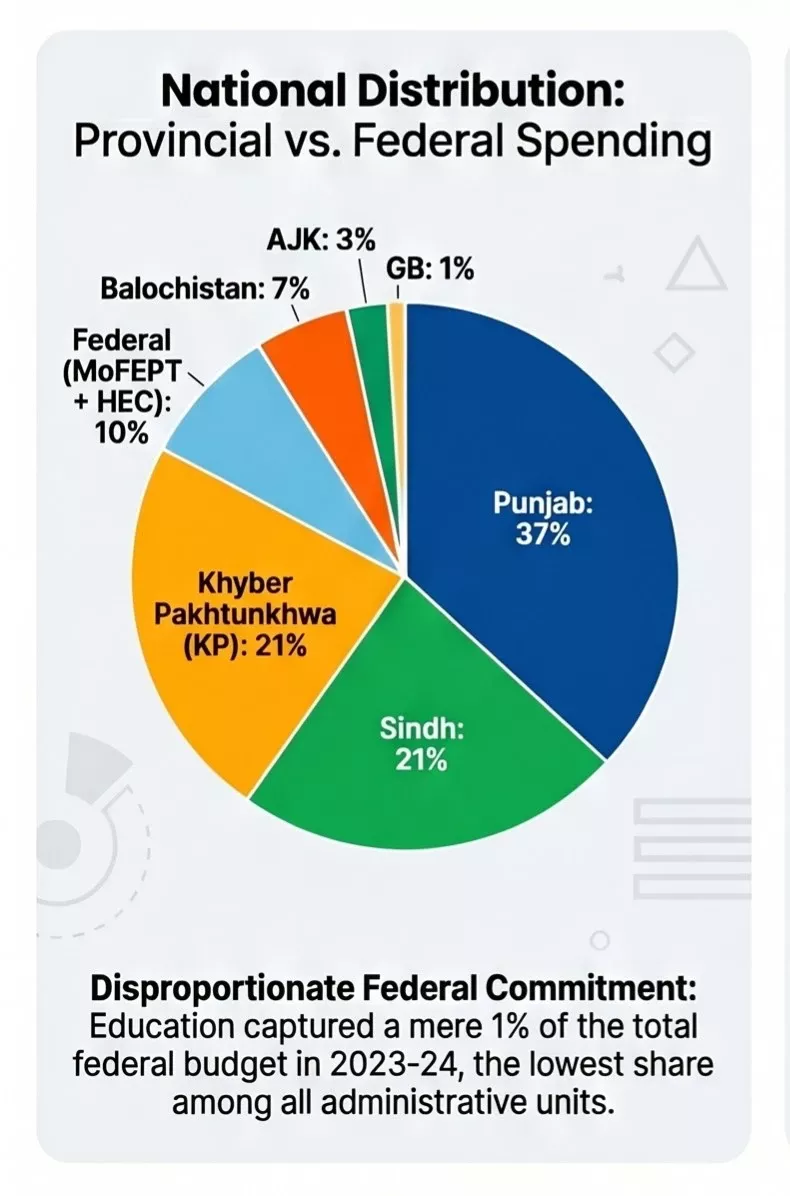
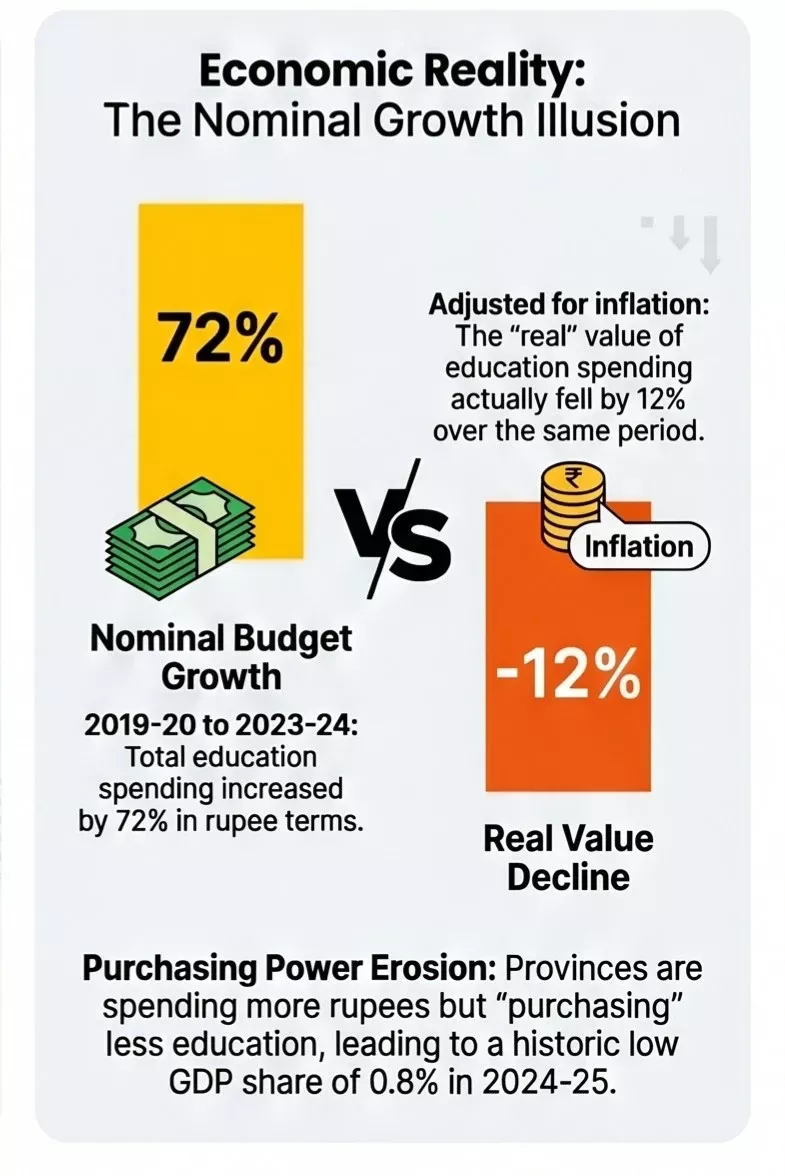
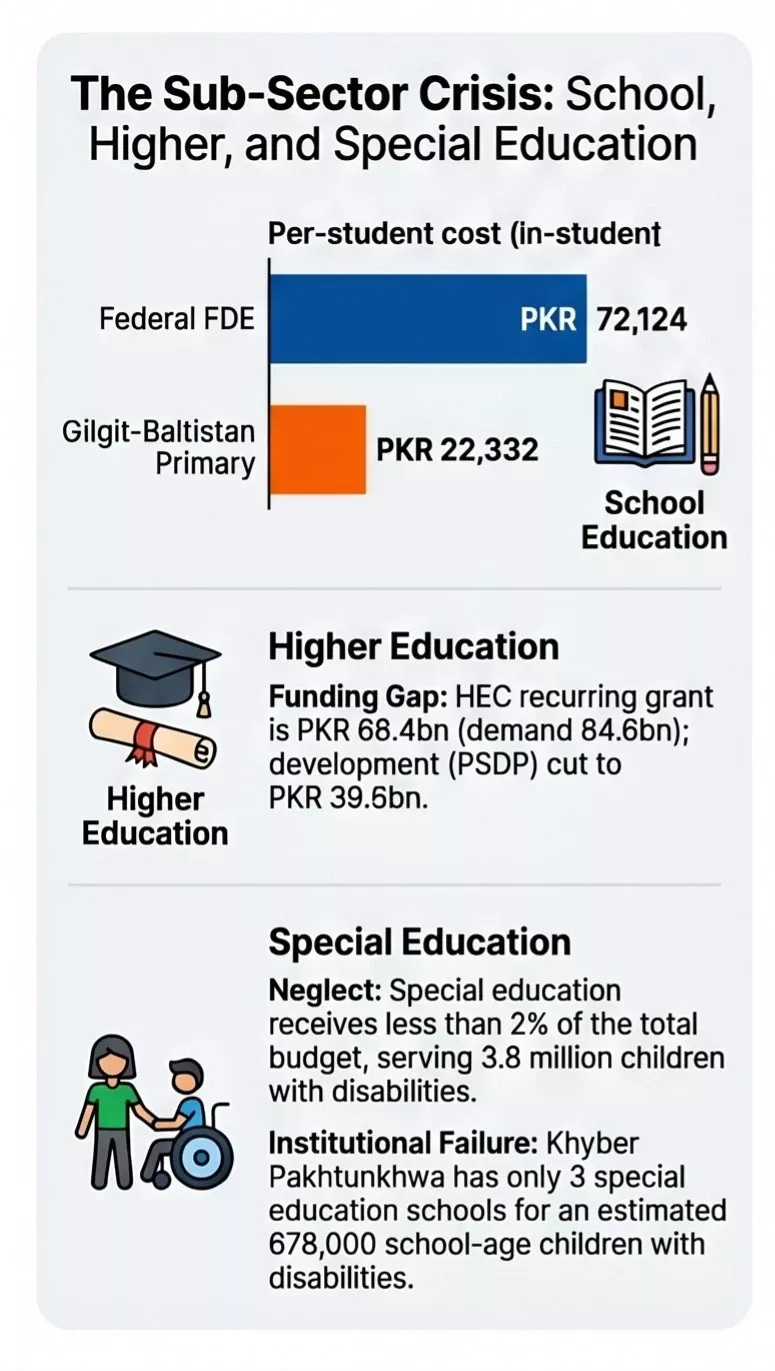
This is not a data Problem
It’s a will problem
The reports exist. The evidence is damning. Pakistan’s own government documents confirm the crisis in precise, painful detail. What has been missing is the moment — the room — where that evidence gets turned into budget decisions.
Nominal budgets grew by 72% over five years. Yet when you adjust for inflation, the real value of education spending actually fell by 12%. More rupees. Less education. That is the illusion that this dialogue is designed to break.
The Federal Budget FY 2026–27 is being finalized now. The window is open. The Pre-Budget Education Dialogue is the last structured opportunity to shape it before it closes.
| 1 | Inflation is erasing every budget gain. Pakistan needs GDP-indexed education commitments, not rupee-increment promises that disappear in the price rise. |
| 2 | 69% of Balochistan’s school-age children are out of school. Provincial disparities are not just gaps — they are generational injustices built into the budget architecture. |
| 3 | 3.8 million children with disabilities are virtually invisible in education budgets. Less than 2% of education spending reaches them across all four provinces. |
| 4 | Pakistan’s National Education Policy expired in 2025. As of today, there is no successor. No policy. No roadmap. No accountability framework. |
| 5 | At least 13.4 million girls are out of school. Pakistan ranks dead last — 148th of 148 — on the WEF Global Gender Gap Report 2025. Two consecutive years of decline. |
One Room.
One Deadline.
One Chance
To shift the Budget.
The Pre-Budget Education Dialogue FY 2026–27 is a national policy forum convened by the Character Education Foundation (CEF) — a non-profit, non-partisan organization with a singular mission: building a brighter future for Pakistan through evidence-based education reform.
This is not a conference where people present and leave. This is a working session. Policymakers, parliamentarians, education economists, researchers, development partners, universities, media, teachers, and civil society leaders will sit together — with the data in front of them — and produce something actionable before the budget closes.
Through keynote addresses, expert panels, and thematic breakout groups, the dialogue will examine Pakistan’s education financing crisis from every angle and generate a consolidated policy brief transmitted directly to the Finance Division, all four Provincial Finance Departments, and the National Assembly Standing Committees on Finance and Education.
Eight Conversations that need to be happen before the budget is pinted.
01
Education Financing & Fiscal Architecture
GDP-indexed targets, NFC Award reform, and ending the illusion of nominal budget growth.
02
Budget Transparency & Accountability
Where is the money actually going? Disaggregated budgets, school-level data, and ending opaque spending categories.
03
Out-of-School Children & Learning Poverty
25 million children. 77% learning poverty. The policies and financing mechanisms to bring them back — and keep them there.
04
Girls’ Education & Regional Equity
13.4 million girls out of school. Conditional grants, gender-disaggregated budgets, and closing the Balochistan gap.
05
Special Education & Inclusive Access
3.8 million children with disabilities are missing from education budgets. A minimum 2% allocation is the floor, not the ceiling.
06
Governance, Data Systems & Policy Reform
The National Education Policy expired. No successor exists. This session addresses the vacuum — and who fills it.
07
Results-Based Financing & Budget Execution
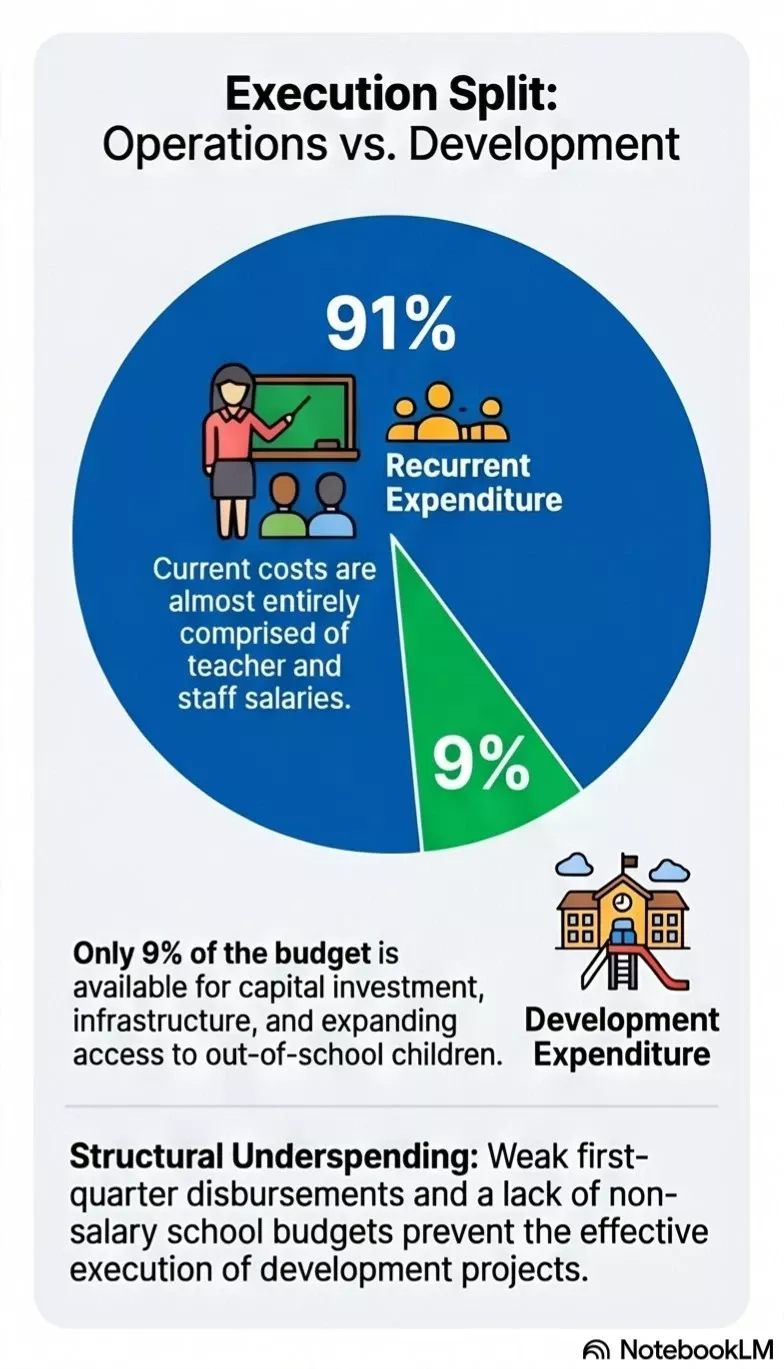
School grants tied to real attendance and learning data. Ending the chronic year-end ADP underspending cycle.
08
Federal & Provincial Budget Priorities
All four provincial education budgets on the table — alongside federal allocations — for the first time in one structured dialogue.
“Underfunding education today does not save money. It bills it to the next generation — with interest.”
Character Education Foundation · Policy Research & Analysis Wing
The Dialogue.
The Details.
The Date.
The Federal Budget FY 2026–27 will be presented in the coming weeks. The window to influence it is narrow and it is closing. This dialogue is the evidence-based, non-partisan intervention Pakistan’s education sector needs — and it is happening now.
| EVENT | Pre-Budget Education Dialogue FY 2026–27 |
| DATE | 18–22 May 2026 (exact date subject to key speaker confirmation) |
| VENUE | Pakistan Institute of Education, G-8, Islamabad |
| ORGANIZED BY | Character Education Foundation (CEF), Islamabad |
| BUDGET FOCUS | Federal Budget FY 2026–27 + All Four Provincial Education Budgets |
| WHO ATTENDS | Policymakers · Parliamentarians · Education Economists · Researchers · Development Partners · Academia · Media · Civil Society |
| OUTPUT | Post-Dialogue Policy Recommendations Brief submitted to Finance Division, Provincial Finance Departments & NA Standing Committees |
Join Us
RESERVE YOUR SEAT
Be in the Room Where the Budget Changes.
This is a structured, evidence-based national policy forum. Space is limited to ensure productive dialogue. Register now to confirm your participation.